14
Touch, healing & being human
Caliban and the Last Human Touch
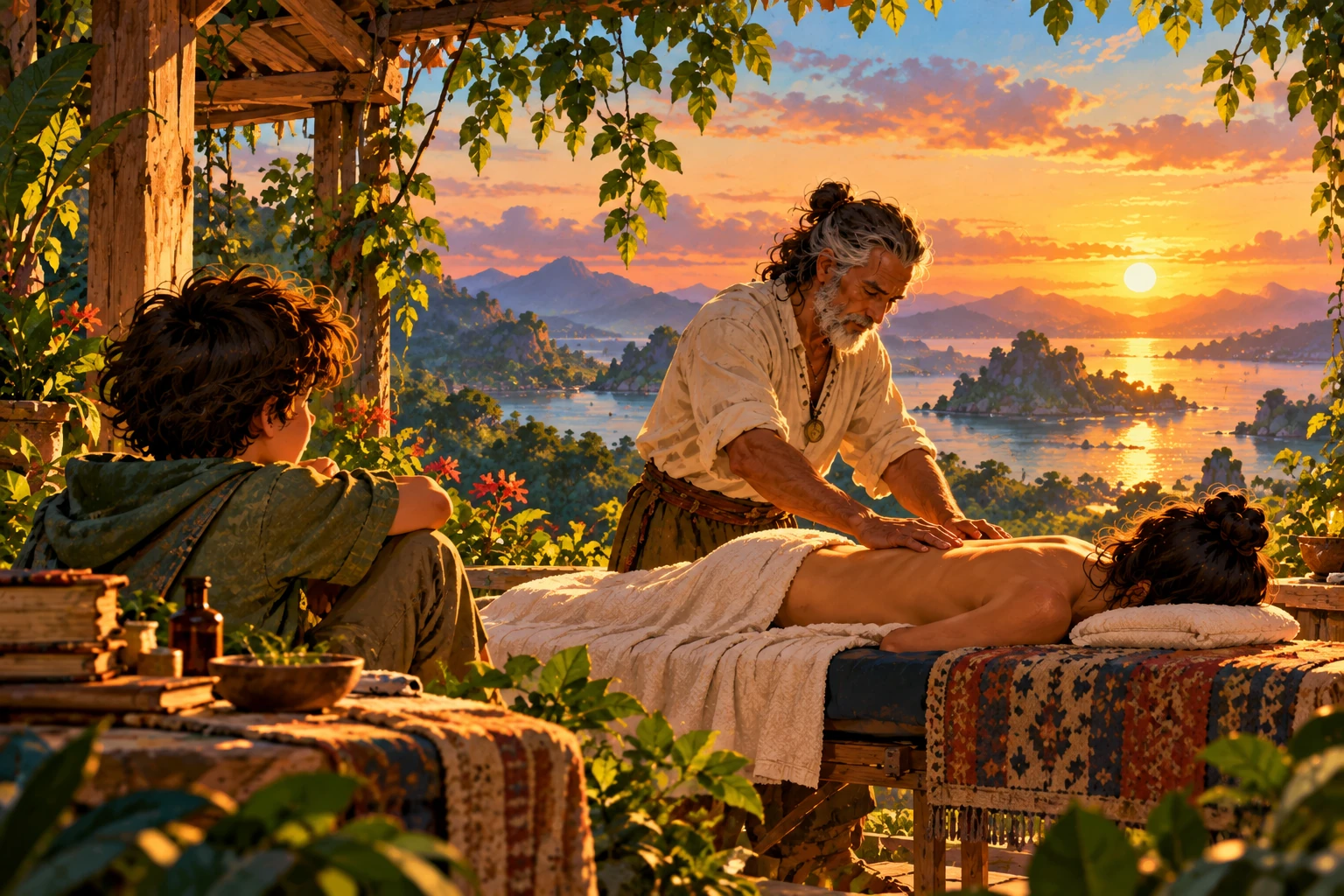
The elder whispered in his ear: “Your secret name is Calibán…”
A patient tells the elder that he does not want to live to see 2050 because artificial intelligence and robots will replace people. The boy cannot let the thought go.
In the future, machines can diagnose, operate, teach, care, and even give technically extraordinary massage. The boy is fascinated rather than simply afraid: if a machine can know anatomy better, measure more precisely, and never tire, what remains human in healing?
The elder refuses to compete with the machines. He learns from them. But the boy begins noticing something that cannot be reduced to pressure, temperature, muscle tension, or data: human touch is an encounter between two vulnerable bodies. To touch another person is also to be touched by them.
The adventure expands beyond massage into holding a frightened hand, helping an elder stand, embracing, planting, cooking, caring for a wound, and remaining present when there is nothing left to fix.
The boy's question changes. The problem is no longer whether machines can do what humans do. It is whether human worth ever depended on being the most efficient machine in the room.